
Good morning if you’re reading this as you’re waking up on Sunday. Obviously there’s an unbearable amount of craziness going on. No bottom. Multiple layers of no-bottomness. We’re in a tight spot.
I am posting and dedicating this body of work to a much-needed collective spirit of positive human endeavor. Anything that advances understanding, empathy, intellectual curiosity, solidarity, truth, creativity, culture, etc now counts as a war footing, a bop to the nose of the evil ‘kaiju’ we’re facing: war, AI, misinformation, demonic overlords, and all the rest. So put yours out there too. We need it. Trust the butterfly effect. Enough butterflies can win this thing.
A note about generative AI (which I do not and will not use, it can go right ahead and leave me behind thank you) one thing it will never do is what real photography does: move through a physical realm, navigating human relationships and interactions to capture authentic images of real humans in their real habitat. It will never be able to do that any more than it can repair your toilet or play center field. - Bill
Hard to believe it’s been almost a year since I left Nairobi after living there for most of two years. It feels like just yesterday we were debating if we should go.
If you follow me you know I was shooting and posting some pics along the way with my blog posts and newsletters (Nairobi Calling, Nairobi Contradictions), but I haven’t really put together the full body of work until now. Contrary to IG-era pressures, best to sit on it for a while sometimes. Gain some perspective, let the work settle, decide what it is that you got and what you want to do with it.
Read on or check it out:
Nairobi
One thing I’ve been hedging about is that I actually have two sets of photos, from Nairobi itself and from the massive Kibera slum in the heart of the city. I’ve tended to mix them. Technically it’s all Nairobi.
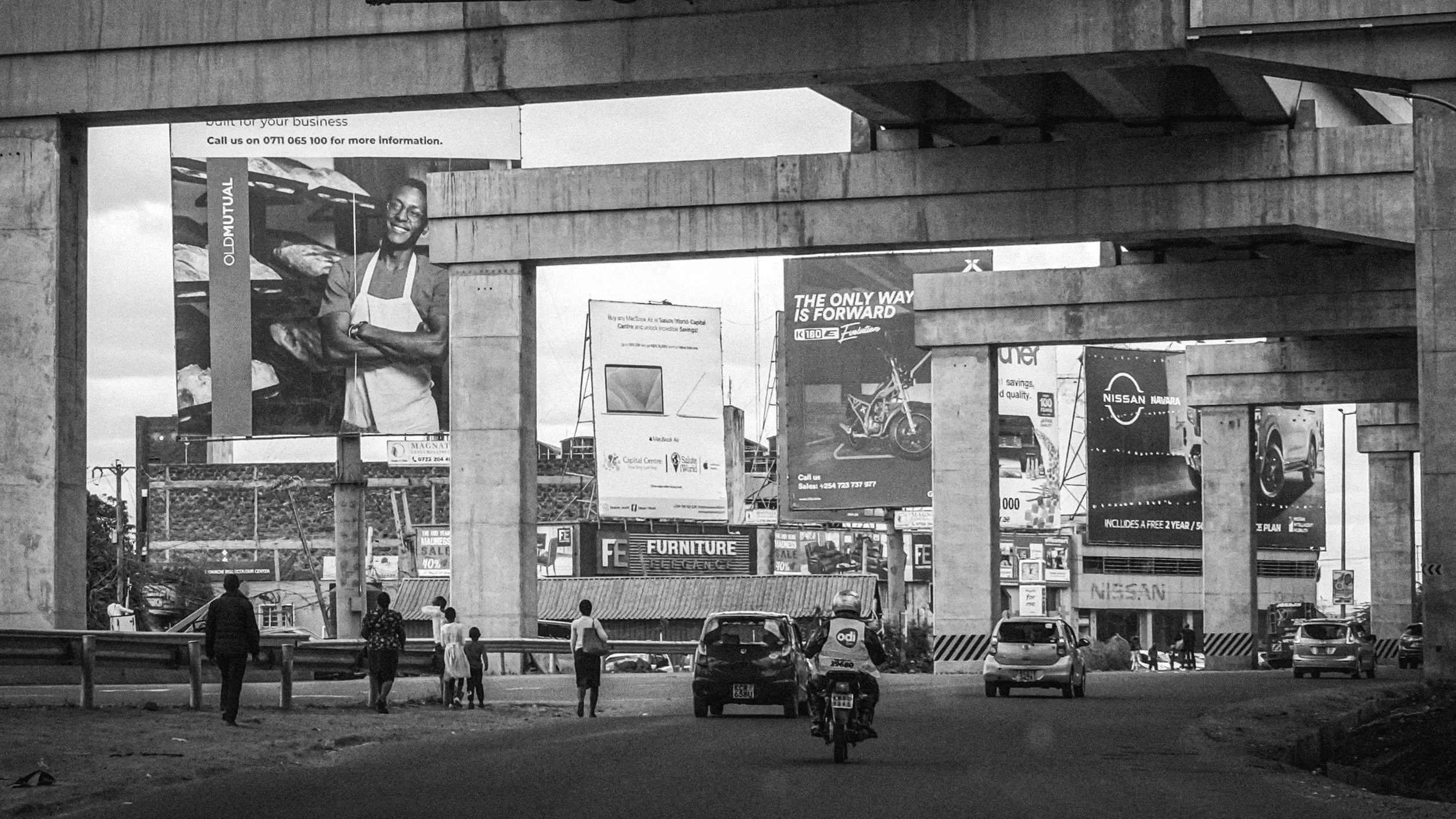
Nairobi
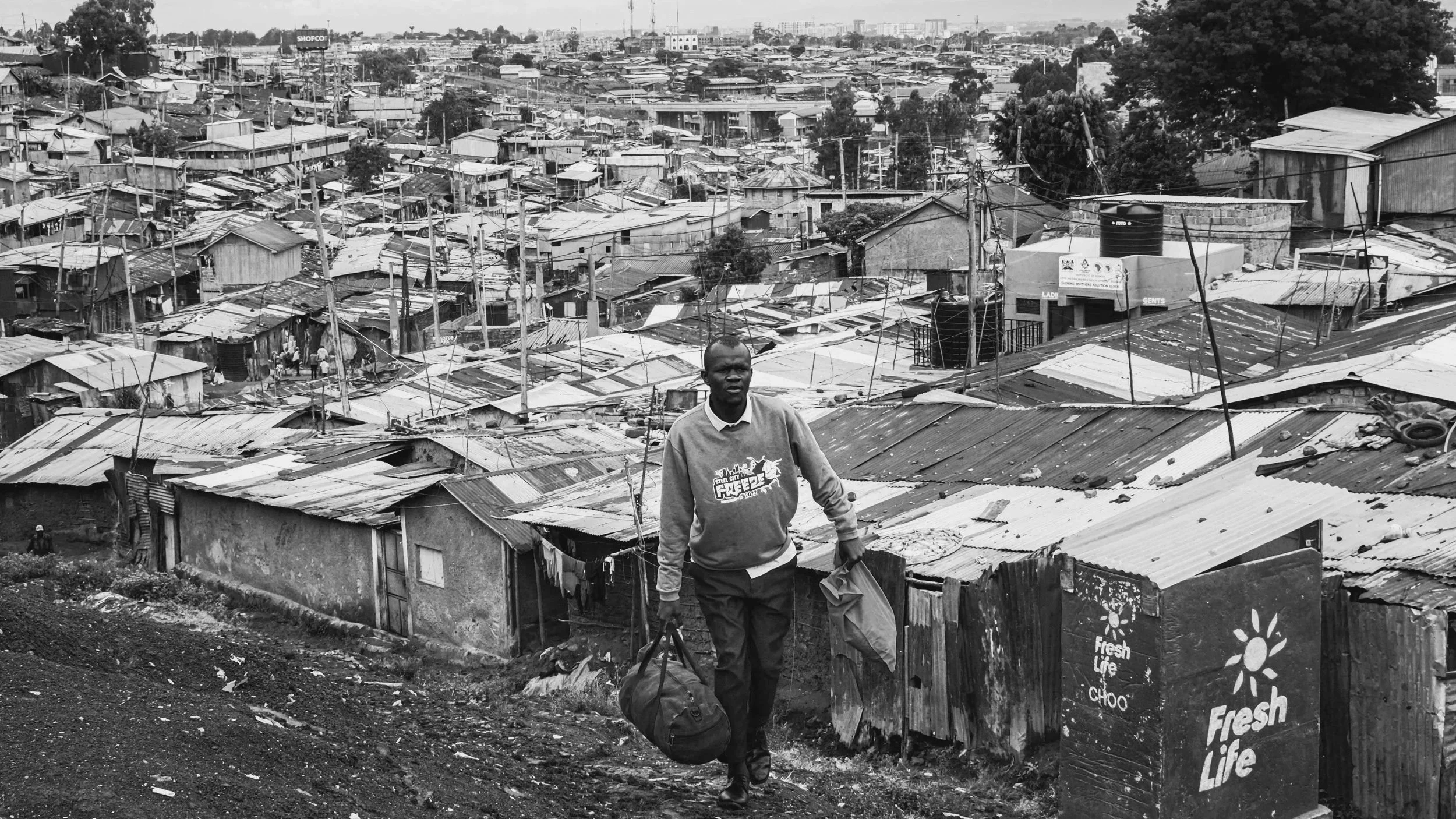
Kibera
At first I combined the best-of-the-best images, from both sets, in a short portfolio. Nothing wrong with that. I’m proud of the best ones, they are some of my finest work. But then I took my own advice and thought about what the work is and what I was trying to do with it.
What I wanted to do is convey the story of arguably one of the most important, interesting, and fast-growing cities in Africa. That’s really the main parameter I set for myself at the outset (I used to tell my students “parameters will set you free”, meaning by defining what you’re doing you’re more free and able to do it, instead of being paralyzed by too many choices). Anything that emerges within that will take shape on its own.
So I ditched the short ‘look at me’ portfolio format, which allowed room for added more images that would tell the ‘look at them’ story. Jump to the galleries here:
Nairobi
Of course no city has one story. But sometimes lots of little story fragments add up to a broader composite. That’s usually my approach, like I did in Belarus over several years for my book.
And who is telling the story? Every photographer wants to make ‘good’ photos. But what makes it good? As a photo teacher I harp on authorship, making it better by making it more you. How do photos express your vision, in your way? What does that look like?
For example, I love symbolism in photos. Like the lead photo at the top, to me this one is loaded with it:
Westlands, Nairobi
These are more examples of ‘my’ photos, hopefully inviting you to fill in the gaps yourself.
So in the end I decided it’s clearly two stories: Nairobi and Kibera. Or at least a two-part story. So I’ve made two galleries.
In any case, maybe this is not so much the story of a place but the story of my discovery of it. Which will always be different from someone else’s view. Which is what makes photography worth doing at all. I still mentor young Kenyan photographers from Kibera who are telling their own stories, from the inside. It’s exciting stuff.
I’m very interested to know what resonates for you.
I hope you will click through to look at them, it would mean a lot to me.