
Over the last several weeks I’ve been hosting a small art-film club in our house in Nairobi. While only a handful of friends, it’s been a surprisingly deep and revelatory experience.
We’ve discussed this new thing that some people can’t even sit through an entire film anymore. Not just an art film, but any film. At least not without being on their phone at the same time. We know books have fallen to the scourge of screens, but movies?? I even saw somewhere that scripts now factor in that lack of full attention by repeating the plot at regular intervals so people can keep up. And that even many film students literally can’t get through, you know, a film.
One film club attendee, a good Indian-Kenyan friend of ours, went to see The Odyssey in the cinema recently and was gobsmacked that one woman was on her phone the whole time.
Our little club (the NBO is Nairobi) - a mix of Kenyans and expats including a documentary filmmaker, a DJ, a writer, a curator, a nurse, and a photographer - was designed as an antidote to the devaluing of cinema, along with so much of our culture. And in fact we’ve discovered firsthand how interconnected films are to other mediums and to the pursuit of art in general.
Just in our short series we’ve watched:
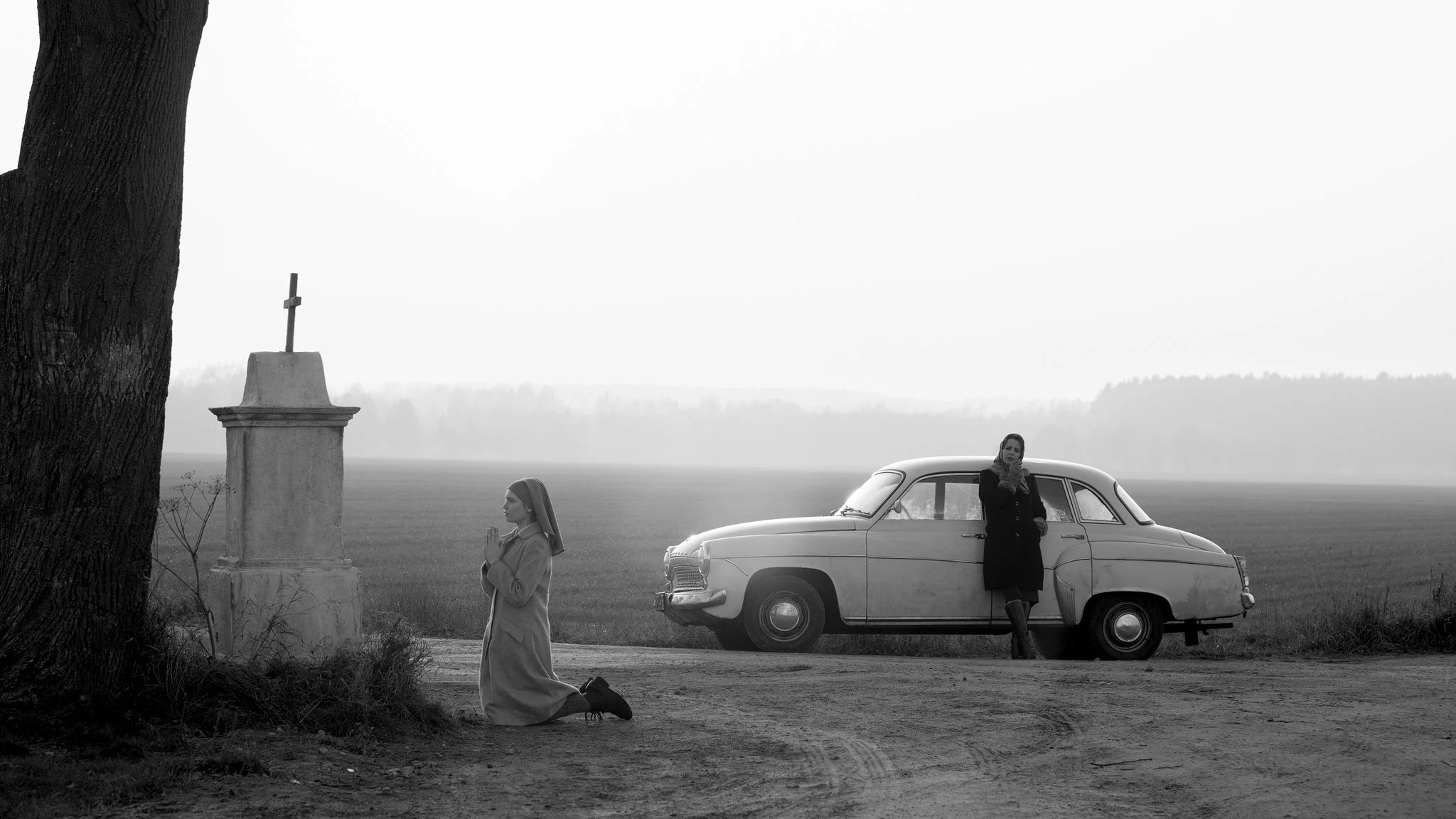
The austere Polish film Ida, that I used to screen for my photography students. Each shot is like a haunting, perfectly composed black and white photo with action unfolding in it. I would warn my students that the static shots might suggest one of those ‘slow’ art films but the brisk storyline hurtles forward from shot to shot.
A Hard Day’s Night, which holds up very well as an electric, cheeky, absurdist film that would have been at home in the French New Wave of the 60s. And of course the music, capturing the Beatles basically being themselves in their early prime. Bracing and energizing. Amazing how four lads elevated how so many people felt about the world.
The visual feast that is the animated The Secret of Kells, and its overriding theme of protecting art and beauty as a kind of light in dark, violent times. Packed with cool references to Irish history, mythology, and pre-Christian paganism.
Perhaps the greatest vampire film of all time: the subdued, nuanced, carefully crafted Let the Right One In. Aside from an ominous mood and a handful of shocking moments, it’s a masterclass in serene cinematography and unexpected narrative twists. It’s like the Twilight franchise but they’re 12 years old in a 1980s Stockholm suburb, the other one is the vampire, and it’s art.
All are examples of powerful and unconventional storytelling. All are examples of moral ambiguity, often with few pure ‘good guys’ vs ‘bad guys’, and endings that invite more questions than answers.
All respect your intelligence and attention. Ida has no music soundtrack to tell you how to feel or when something is important. You just have to watch. No Country for Old Men (from Colmac McCarthy’s book) builds to a showdown that never happens, and the ending is a vaguely poetic head-scratcher.
Maybe one of the most powerful was our first one, Bela Tarr’s incomparable Werckmeister Harmonies. I say incomparable because you really can’t compare it to anything. Except for his other films, like the seven-hour Satantango. WH is a 2.5-hour film with 39 shots, each a (long) masterpiece of movement, light and shadow, composition, and mood. As an auteur’s relentless vision, it’s not for everyone, certainly not these days. But if you have the openness - and the stomach - for it, it is a rich and even profound experience.
(For each of these, notice I’ve linked to their respective Film Club event pages here on my site, for capsule summaries and a selected review extract.)
The experience of watching together, quietly and intently on a good screen in a darkened room, has brought back the pleasures and rewards of cinema-going in microcosm. I dare say each film shifted us in its own way. Because we gave ourselves to each one fully.
My Indian-Kenyan friend was so moved that he rediscovered his dormant writing profession and has rededicated himself to the craft. He said film club saved him. The Kenyan curator said Ida in itself could be a photography masterclass. I told them how my Graphic Design teacher colleague showed The Secret of Kells to his students purely for the aesthetics.
Our last one before I head back to the US for a while is Spike Lee’s masterpiece Do the Right Thing, which is still hilarious, provocative and tragic, the police-brutality ending sadly all too relevant to today. For representation of the USA, one vivid Bed-Stuy block is a striking cultural contrast to No Country’s west Texas landscape. (Interestingly, they are both set in the 80s, though No Country was of course made later.)
I have to say all of these films feel relevant to the moment we’re facing. They are all incredibly human. And the act of watching these films, based not on Hollywood formulas but creative authorship, in-person, all the way through without a phone break, letting them do their work on us, felt incredibly human as well.