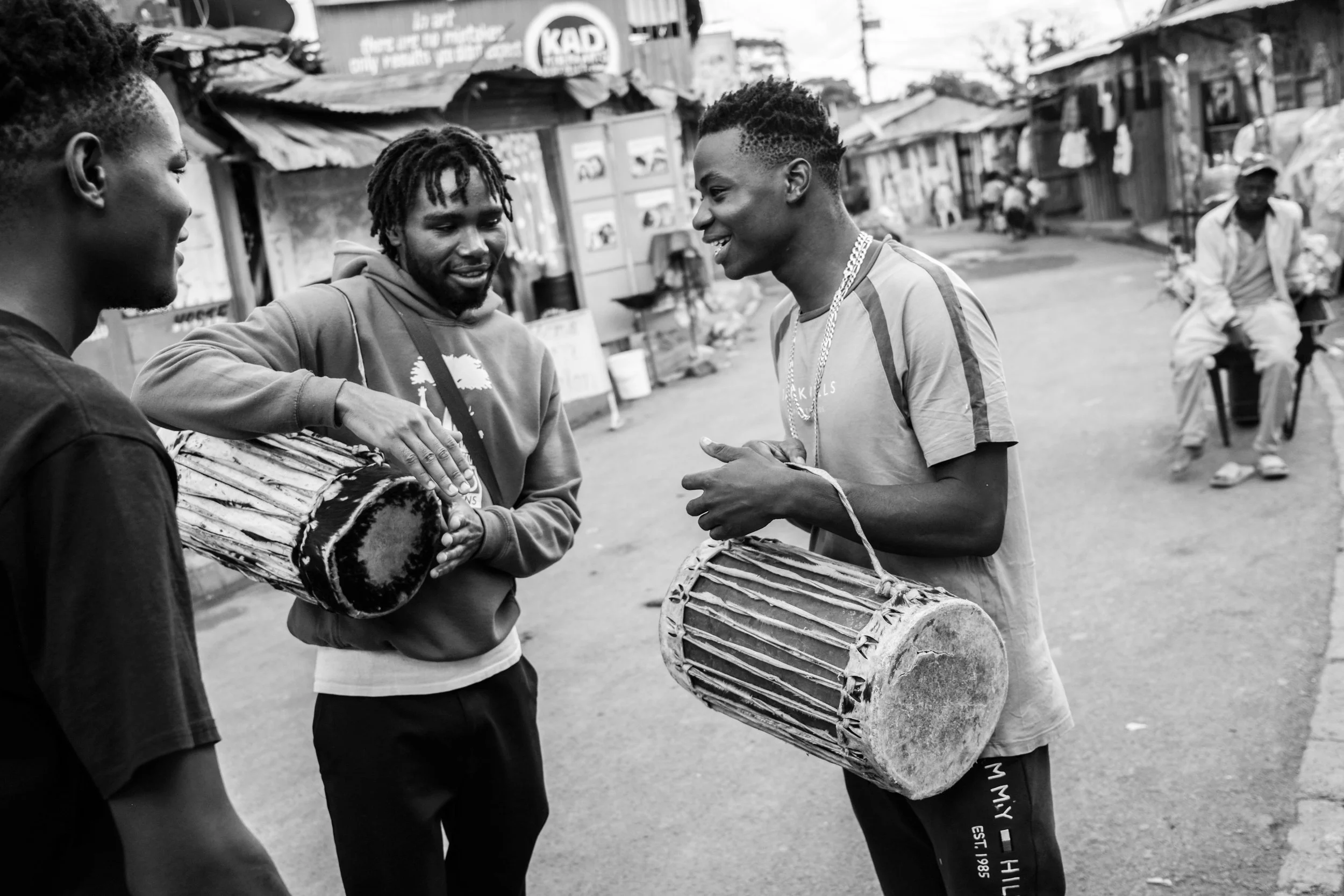
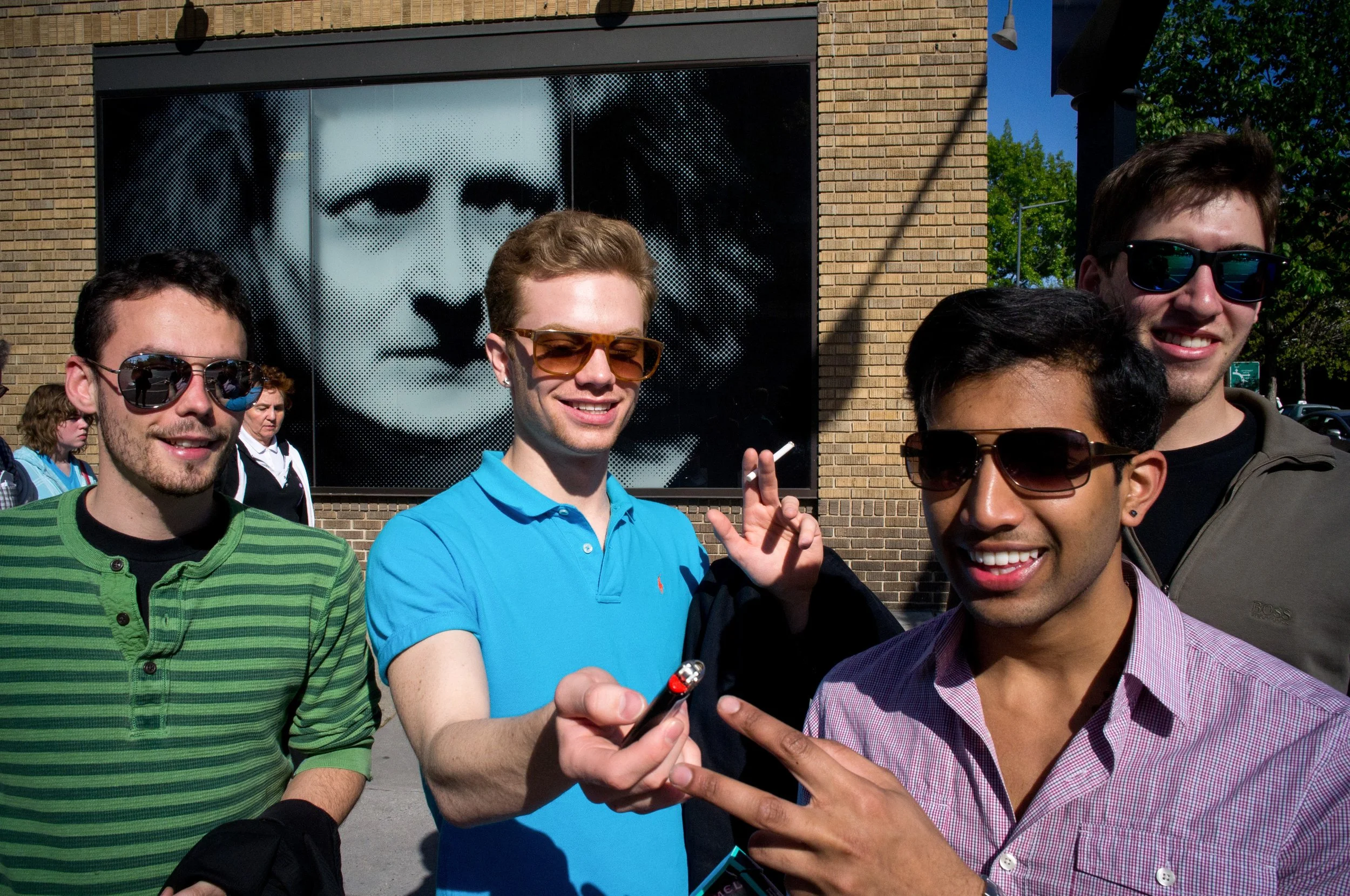
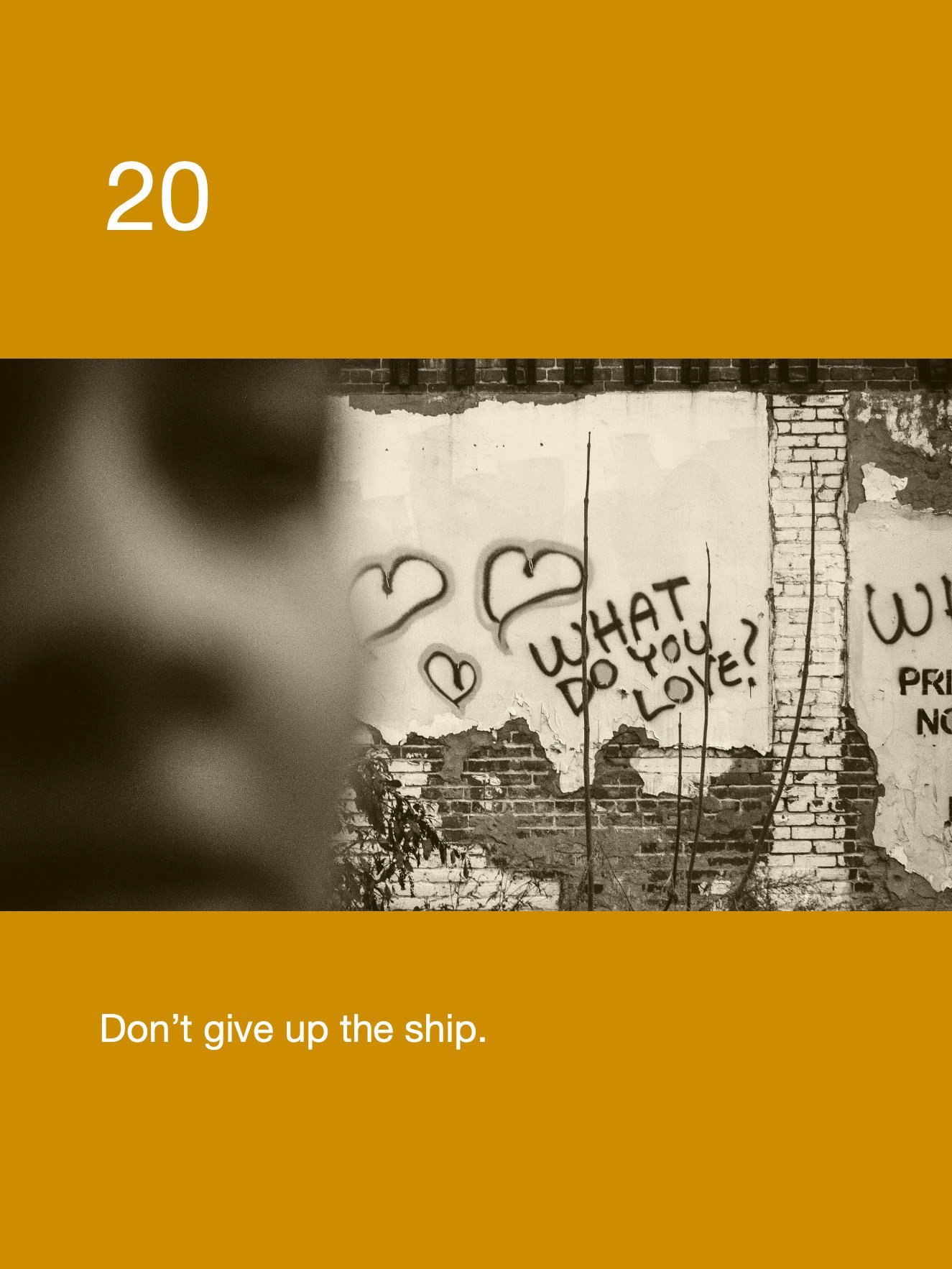
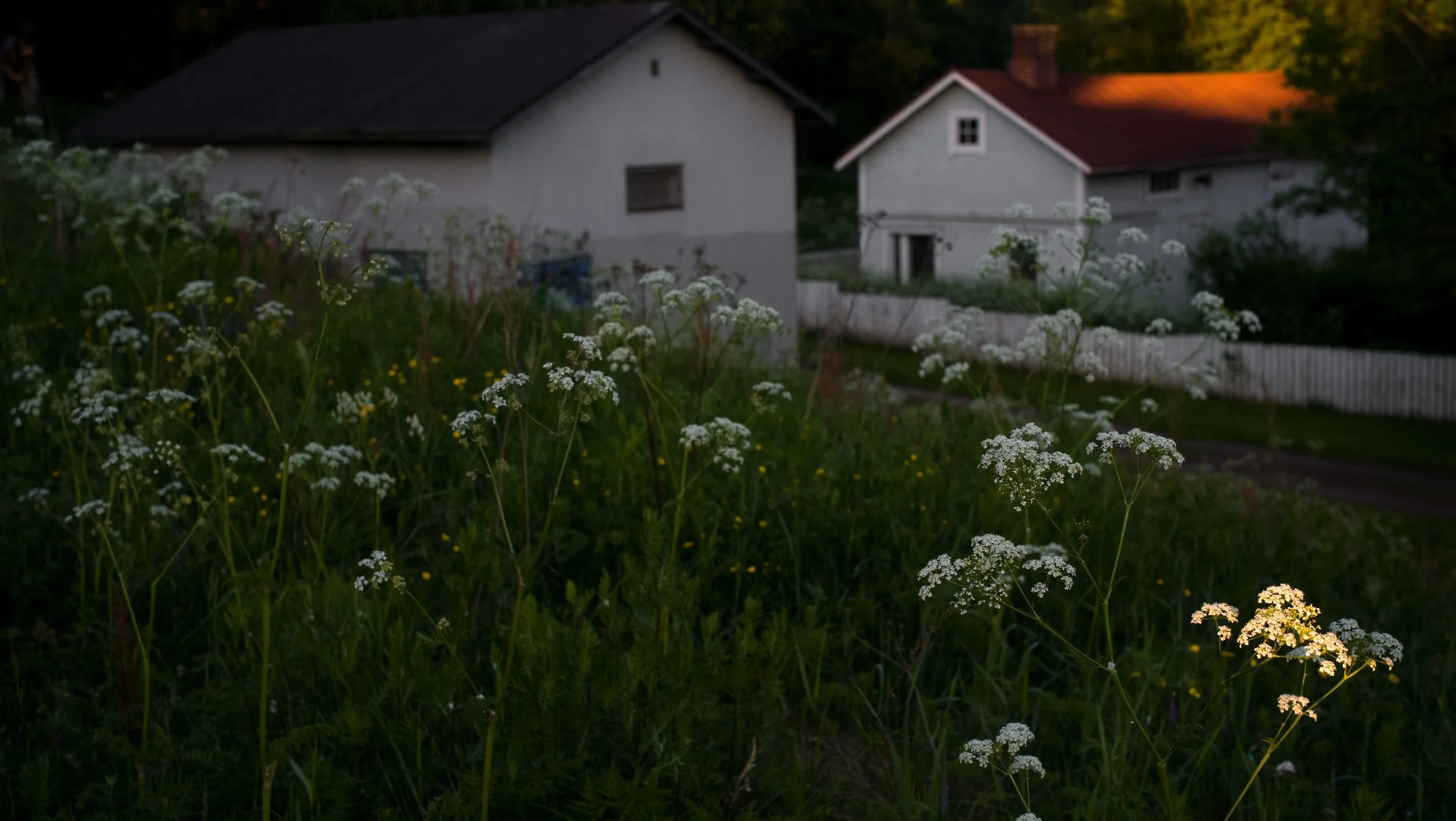
Photo Journal: Kibera Karma

Maybe the best two hours of my photographic life

(all photos made on November 7, 2024)

So often when photographing out in the world, I pray to the photo gods.

It’s important because many things have to fall into place for a decent photo. Sometimes you just pray for something, anything, to work with. You pray for good light. You pray for moments and serendipity. You try to not screw up if those things do find you.

Sure, you can manufacture something. But there are ethics in photojournalism and documentary work, one of the primary directives is no fake/directed action. I never did that. Either it happened or it didn’t, and either you got it or you didn’t. If it’s fake, it’s nothing, a bit of theater. The power is that it’s real, authentic. Even as my work has moved to somewhere between art and documentary, I adhere to this. You become a kind of scavenger, a human divining-rod.

It’s getting harder in the modern world as life gets more conformist, regulated and suffocated, especially now that people live in front of screens. Years ago when I started as a photojournalist for newspapers, I would sometimes get sent out by an editor to find a ‘stand-alone’, meaning an everyday-life photo without an article. Just go find a good photo to fill space on the page.

Even before screens took over, I would drive and drive around the suburbs for hours (with my stack of map books, this was before GPS), frantically searching for anything that looked like a photo op. Something going on, something unusual, some sign of life. All I needed was one good shot.

You try making a picture in strip-mall suburbia.

Then there is Kibera.


I’ve written on Medium before about the vast Kibera slum, the largest in Nairobi and in all of Africa:

Why Africa’s Largest Slum is the Best Place in Nairobi

Ok, that’s a title meant to provoke. But in a city of contradictions Kibera is a Russian nesting doll of contradictions within contradictions. A complex place, defying easy stereotypes.

It has a notorious reputation — even Kenyans are a bit afraid of it — but it has achieved basic services like water and electricity in recent years. Because of its notoriety it tends to get more outside aid projects than other slums in the city, but certain episodes have also bred distrust of outside aid. There are byzantine layers to who controls what areas, but also a fierce sense of community often lacking in the rest of Nairobi.

There is an arts district.

I haven’t been to other slums — there are many in Nairobi — but I am told they are often more tense and get far less aid.

In some parts of Nairobi, you can see the dense medieval cluster of Kibera’s corrugated roofs as you whiz by on a nice roadway, as I did in my Uber ride from the airport when I first arrived here in 2023. I was immediately fascinated and knew I would need to somehow explore it. Which I eventually did, with the help of local friends. It was the privilege of a lifetime to gain access to such an intriguing place, where people are trying to live with stoicism and dignity despite the conditions.

Unlike suburbia, in Kibera everything is interesting, irregular, unregulated, improvised, alive. In its own way it has more vitality and intrigue than most of the world’s great cities. There are phones, but no one is sitting at home on Facebook. Life is outside.

Kibera is difficult to penetrate — you wouldn’t last long walking around, esp as a mzungu (white guy) with a camera, nooo sir — but with the right guide everything is possible. People barely look at you, they know you’re vouched for. My guide was a young painter that everyone seemed to know and like.

My first foray into the massive slum had been overwhelming, overstimulating, there was literally too much that seemed worthy of a photo. The next couple times I settled in somewhat, and had a few chances to get inside the life a bit more.

Then I had the kind of day photographers dream about.


My last visit, this past November 7th, wasn’t special at first.

It was raining hard in Kibera. Our guide had something come up and was a couple hours late, so my friend and I had lunch. It seemed like we might not even walk around at all.

Then we did, and hoo-boy. It may have been the most productive 1–2 hours of my photographic life. I have plenty of other work from Kibera, but all of the photos posted here are from the one walkabout that day. They are all basically street photography, quick-reaction observations. Sometimes I would pause a bit to let things come together, sometimes I barely had to break stride.

I’ve always thought good photography is more like channeling or receiving photos rather than either taking or making them. Usually that channeling happens rarely, when I’m in sync with the flow of things properly. This was like that, but over and over.

In the old days driving around on assignment, I’d be happy to get one good one that I didn’t mind putting my name on. If you got three or four worthy shots in an afternoon it was a rousing success. About the same for my personal work.

In one short outing in Kibera I got almost twenty images that I think hit the spot in some way.

Of course, I won’t end up using all of them. But twenty that I would consider for exhibition. Which I may be a part of soon, at a small gallery in Kibera I’m helping to launch for Kibera photographers I work with.

The photo gods were indeed smiling. Maybe it was their karmic gift for all that time I used to spend searching in frustration.

My father went to art school at Pratt in NYC in the 1950s. I remember he criticized the ‘trash can school’ of art, meaning going out and finding the most rundown person or place you can, taking a photo (or making a drawing or whatever), and calling it art. Exploiting people for their picturesque poverty.

This is especially a problem in Africa, which is maybe the most chronically stereotyped part of the world.

As a general practice, I never set out to make a place look bad or good. Certainly I try to never punch down from a position of privilege. I also try not to fall into sugar-coated clichés of the ‘happy poor’. Getting that balance is the crucial test when photographing places like Kibera. I can only photograph what I like. I look for what is interesting and feels both true and fair to people and places, and I understand that stories are complicated.

If you’re doing it right, photography challenges you to up your equanimity game. Not how to fake it but how to have it. As a well-known photographer once told me, people can see through you. They can see through you THROUGH WALLS.

I want to show that Kibera is interesting and worth caring about in a positive way. I love it and hope that comes through.

As I wrote previously after my first short visit: “what I really wanted to show was the unique landscape and the relationship of people to it”. Which is pretty much what I always try to do.

Kibera is not the bogeyman of dysfunction it is often portrayed as. It’s a fascinating urban organism — and a community. A community full of all kinds of complex problems and life is hard. Still, as I saw over and over, if people stick together with some toughness and care for each other, they can get through anything.

Which is dangerously close to a happy-poor stereotype. Sorry.

It’s the best I’ve got to strike a blow against all the unfolding disasters in the world. I refuse to add to the negativity. Something about a butterfly’s wings.


Remembering James Reeb

His murder was national news in the civil rights era. Here’s why his important American story is personal for me.

The former Walker’s Cafe, where James Reeb had his last meal, in 2015. (Photo by Chris Walton, courtesy of Unitarian Universalist Association)

Author’s note

For those who subscribed to me on Substack, I’m still there but now publishing newsletters from my own website.


James Reeb was a white Unitarian minister who, in March of 1965, heeded Martin Luther King’s call for clergy nationwide to join him in Selma, Alabama. The night after turning on the TV news to watch the Bloody Sunday violence against civil rights marchers at Edmund Pettus Bridge, Reeb told his children a bedtime story and got on a plane south from Boston.

He would never see his family again.

A day after arriving, Reeb was part of MLK’s second attempt at a nonviolent march across the bridge, the so-called Turnaround Tuesday. This time the marchers simply gathered, kneeled, prayed, and dispersed, avoiding violent confrontation.

That night after dinner, coming out of what was then Walker’s Cafe — a black-owned diner and one of the few restaurants that would serve blacks or their white supporters — Reeb and two fellow clergy were verbally accosted by several white men across the street.

The men followed and caught up to Reeb’s group a half-block up the street just before the Silver Moon Cafe on Washington Street. Here is the spot:

Silver Moon Cafe, then and now. Washington Street, Selma, AL.

Reeb was hit on the head with a pipe or club of some kind, and others in his group were pummeled. They somehow managed to stagger several blocks to an office serving as the marchers’ headquarters to call an ambulance.

Days later, Reeb died in the hospital at age 38.

That’s the short version of a complex episode in US history. One that was the talk at kitchen tables nationwide at the time, but is slowly fading into obscurity.

Why am I talking about it now?

The former Walker’s Cafe (center). Reeb and his colleagues left the diner and turned right. (Photos from Google Maps)

Directly across the street, where there used to be a row of commercial storefronts, a gang of white men shouted at Reeb’s group, using the n-word, and followed them.

The former Walker’s Cafe is on the far right. The corner building at left and part of the empty lot in the center is where the Silver Moon Cafe used to stand. In front of the lot is a plaque marking where Reeb’s group was attacked as they walked.

With Reeb seriously injured, they walked four long blocks to this building to call an ambulance.

For one thing, as I wrote this from overseas it was March 7th, the anniversary of Bloody Sunday. As I first hit publish, it’s the anniversary of Reeb’s death five days later.

But I also have a personal connection to the story.

James Reeb married my parents.


The room where my parents met in the late 1950s.
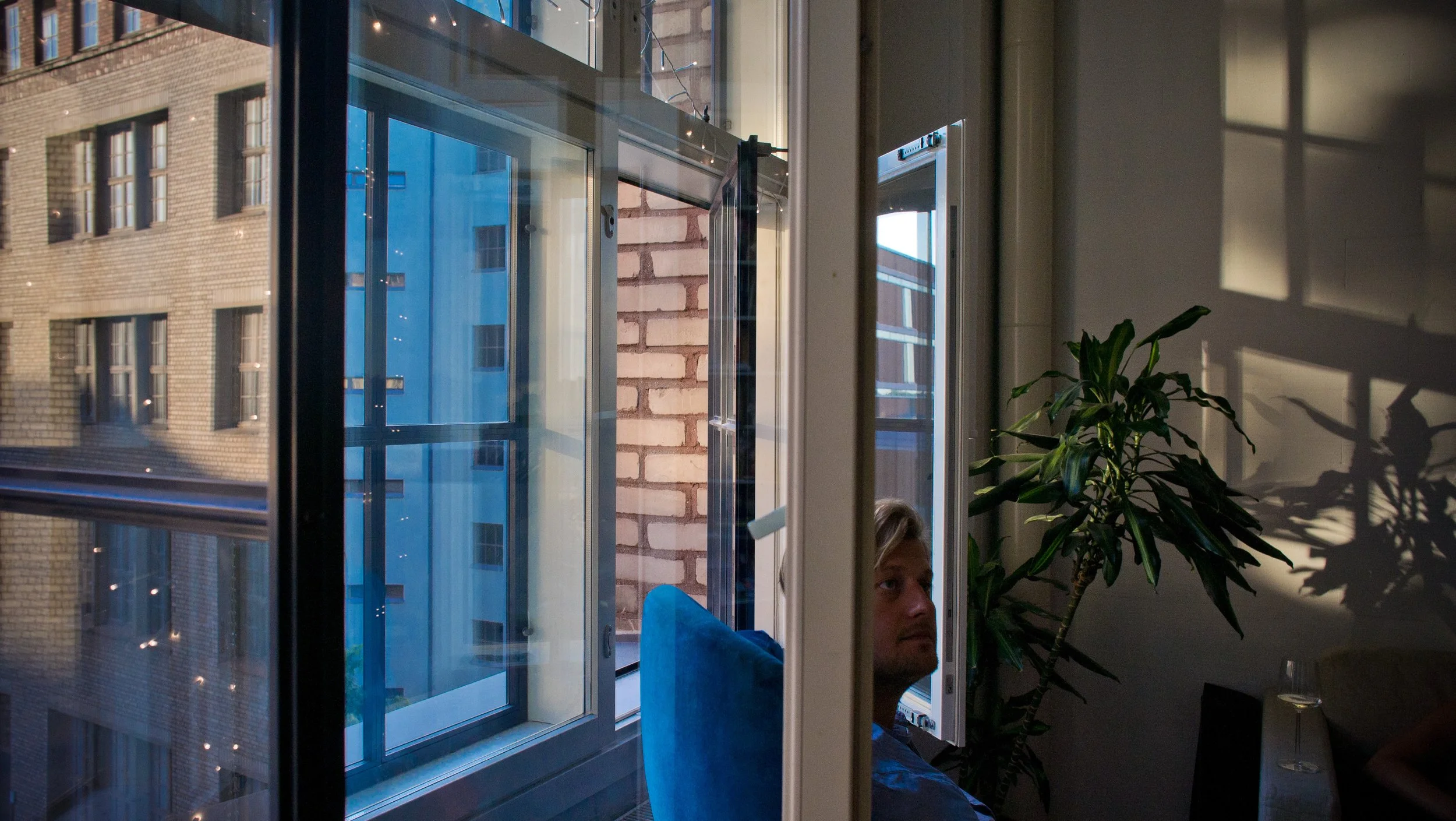
In 1959, before moving to Boston, Reeb was the young assistant Unitarian pastor that officiated their wedding at Washington DC’s All Souls Church on 16th Street NW. The church where my parents met in the reception hall, the same room where we had my father’s memorial service in 2010.

But there’s more.

Reeb’s murder did not go unnoticed. Quite the opposite, the national outcry was such that it galvanized public support for the Voting Rights Act, which LBJ introduced days after Reeb’s death and signed into law months later on August 6, 1965.

The day I entered this world.

So, without getting into what has become of the Voting Rights Act more recently, you might understand how I have long felt a karmic connection with James Reeb. His quiet example of equanimity, conscience, and courage has often guided and inspired me. My parents told me Reeb’s story, and I tell my biracial daughter about him as a matter of family lore.

For 15 years I was a teacher and would tell my students his story to make the civil rights struggle more tangible through my personal connection. He’s represented in the 2014 movie Selma. We saw the film on a school field trip, sitting in the dark theater I choked up a bit seeing ‘him’ onscreen.

He died trying to help. Like a firefighter running toward, not away from, the flames. He would find out his white skin didn’t make him fireproof.

When discussing Reeb it’s fair to note that it was a white man’s death that was a game-changer at a time when so many blacks were being killed. But in a way that’s the point. To me, it’s an example of what more white people should do.

No, not get killed. But in a white-privilege society, whites need to stand up for what’s right in whatever way they can. You can’t just leave the oppressed to fight their own battles.


While I always had a fuzzy imagining of how his final moments played out, with a bit of research and an assist from Google Maps images, I came up with this virtual visit to the scene of a hate crime that rocked a country already reeling from the atrocities of Bloody Sunday.

The current desolation of the cityscape is striking. I was shocked the cafe still exists. Then Selma was a more bustling place, with evil just under the surface (except when it was on the surface). Now it appears to be just another dying small town, the block where the events happened is almost completely decimated by time. A town haunted, yet propped up somewhat by civil rights tourism. Hard to imagine where Selma goes from here.

Finally, as a footnote, there was never really criminal accountability in the case against Reeb’s attackers, who did stand trial but locals closed ranks around the accused. NPR has an excellent podcast and audio-visual interactive piece with a fuller exploration of Reeb’s death and the aftermath called White Lies, definitely worth checking out.

If you go to All Souls today, it is still a lively, progressive Unitarian congregation dedicated to social justice and voting rights. Photos of Reeb hang on the walls.


[First published March 12, 2024 on Medium. I’m making a tradition of posting this every year on the anniversary of Bloody Sunday.]

Takoma Dreaming

Maybe it’s homesickness or expat daydreaming, I made a wish list of attributes of my dream place to live.

- cloudy/cool at least half the year

- English language

- small-scale architecture (preferably not newly built)

- small, cozy homes

- tolerant social norms

- diverse population

- arts/culture centered

- access to nature

- not dominated by rich people

- openness to outsiders

- modest/practical dress norms

- active, cared-for public space

- clean, trash-free

- walkable (car not needed)

- safe

- local/indie shops

- good and affordable health care

- simplicity

- bohemian atmosphere can be found

Then I realized many of these qualities exist to some degree where I’m from, Takoma Park MD.

US Civil Defense Guide

Some countries in Europe have been distributing pamphlets to all households on how to prepare for and deal with crisis or war.

So, inspired by the Swedish one, I went through my archives and made one too, an artist’s (semi) mock survival booklet.

Obviously events are moving fast so make your own personal adjustments as needed as the situation warrants.

Please share for maximum preparedness.

Take care out there.

Print-ready PDF available for purchase in my Squarespace shop.

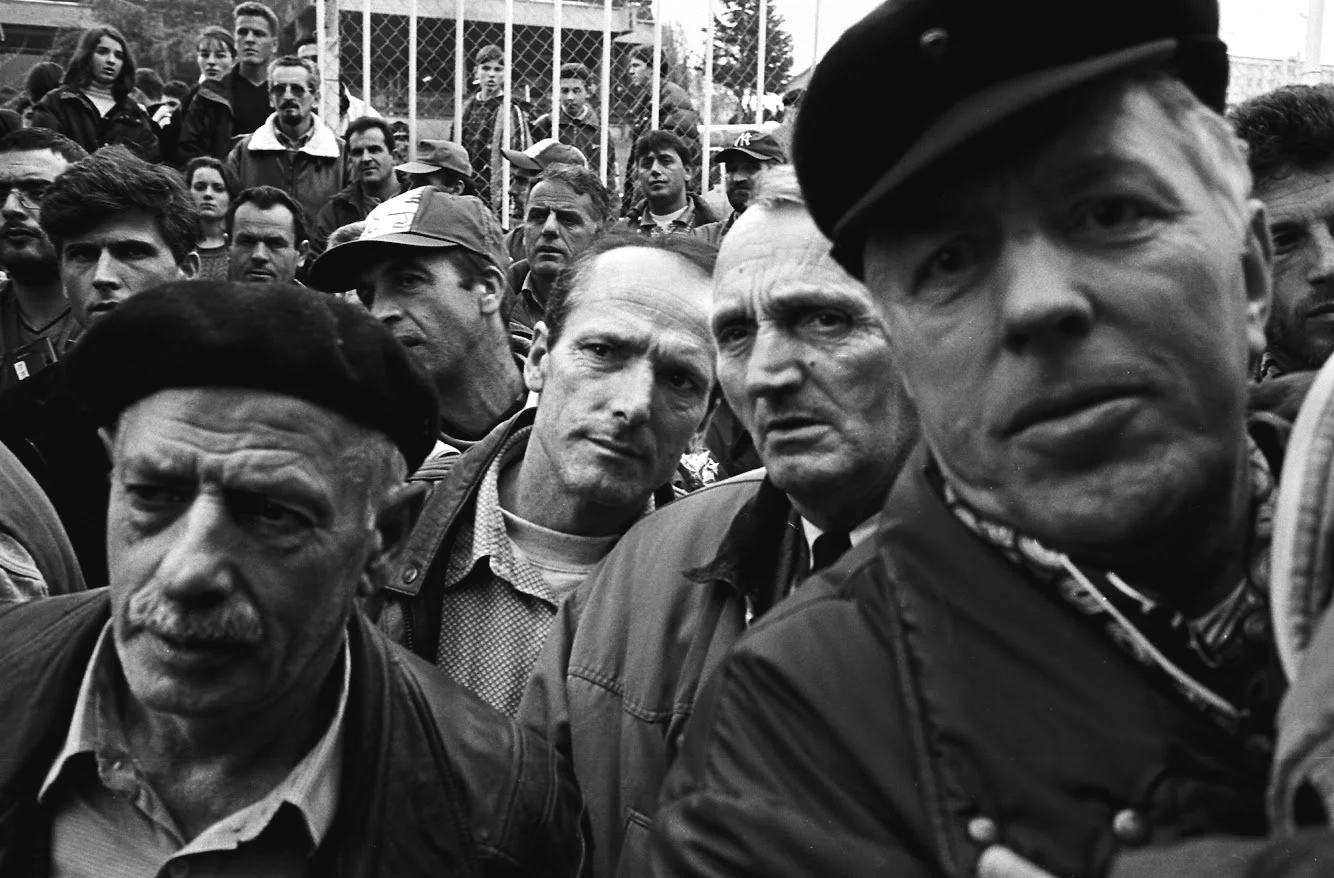
Kosovo, 1999

My first day in Kosovo, nowhere to stay yet, walking around with my backpack on. School had just reopened, for kids who were just back from muddy refugee camps in Macedonia. Must have felt like the first day of the rest of their lives. 20 years on, I wonder how they’re doing now as adults.

Pristina, Kosovo, 1999

Prishtina, Kosovo, 1999

Kosovo, 1999

A few days after I arrived for a week in Prishtina, the UN plane I had taken from Rome, and would be taking again for the return flight - the only plane shuttling aid workers in and out of postwar Kosovo at the time - crashed into a mountain on descent and killed everyone aboard. I went to the memorial that was almost my own.

Memorial service, Pristina, Kosovo, 1999

Memorial service, Prishtina, Kosovo, 1999

Kosovo, 1999

Yeah, but the next day it was totally different, all cleaned up. Was I trying to show that the postwar city lacked proper trash collection? No, I was cold, feeling sick, and standing out of the November rain, wondering what to do.

Pristina, Kosovo, 1999

Prishtina, Kosovo, 1999

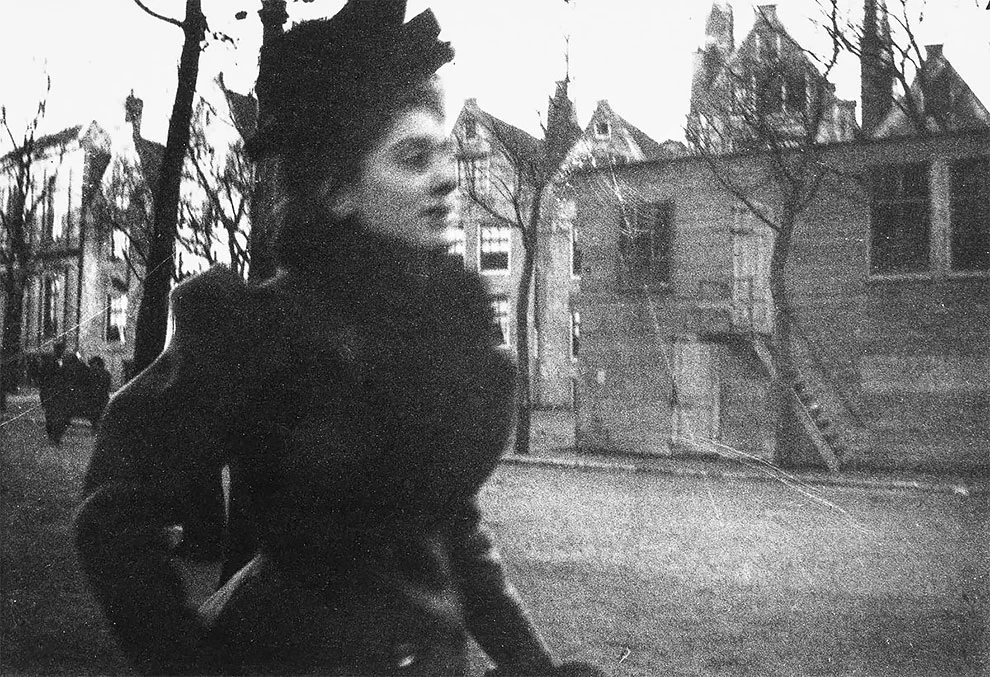
Dutch street photography - in the 1890s!

Tremendous work, the 1890s like you’ve never seen. Great instinct for both the moment and the whole frame, like if Cartier-Bresson had been around 40 years earlier. Also striking is the sense of place and mood. Like you’re there. But how was he shooting so quickly with the film limitations of the time?

https://designyoutrust.com/2018/12/dutch-impressionist-painter-george-hendrik-breitner-took-his-camera-onto-the-streets-of-amsterdam-in-the-1890s/

4th of July 2014

[Last year’s 4th of July post is here]

One thing I’ve noticed myself doing lately in conversation is finding excuses to bring up how far back I can trace my ancestry in America.

On my father’s side (hey look, I’m doing it again!), the Crandalls go back to Elder John Crandall, who came over from England in the early-mid 1600s. He was apparently an associate of Roger Williams, who established the state of Rhode Island. John Crandall — same name as my father — was among a group of two dozen souls that settled Westerly, RI (amazingly his homestead still stands, not far from a Wal-Mart). He seems to have been at least somewhat of a dissident-minded pilgrim, which would have endeared him to Williams, who sounds like my kind of guy for his progressive attitudes on slavery, native Americans, and religious freedom. Thomas Jefferson was known to quote Williams. So I reckon that gives me only a few degrees of separation from the Founding Fathers.

On my mother’s side, our first ancestor was 7-year-old Hugh Fraser. In 1707, legend has it little Hugh was kidnapped off the street in Paisley, Scotland and shipped off to America as an indentured servant, ending up on a Maryland tobacco farm. Basically a trafficked child. As traumatic as it must have been, Hugh grew up to marry the owner’s daughter and take over the place. (I guess white privilege extends pretty far back as well, but that’s another discussion.)

The farm was on the eastern shore of the Chesapeake Bay, just across the water from where my mother lives now. The memorial for my mom’s companion Ed Becke, who passed away last year, was held in old St James Church, which existed during Hugh Fraser’s life 300 years ago. Maybe he heard of it, or went there at some point. Maybe I was sitting/standing/walking where he did the same. I find that incredible.

So there are two family links to pre-George Washington America. Not too shabby, as my father might have said.

I love thinking about history in ways that make it more personal and resonant.

Lincoln would often ride his horse from his summer cottage to the White House, passing quite close to where I now live. He surveyed the burial of Civil War soldiers in the cemetery I pass going to my daughter’s ballet lessons. Lincoln’s son Robert died a few years after my house was built — within the house’s ‘living memory’ if you will — which somehow brings Lincoln himself closer.

My parents were married by James Reeb, a Unitarian minister and civil rights activist who would later be murdered by white racist thugs in Selma in the early 1960s. Another reason I haven’t quite forgiven the South yet. His death sparked a national outcry that helped bring about the Voting Rights Act, which Lyndon Johnson signed into law, it so happens, on the day of my birth. Reeb officiated the wedding at All Souls Church, where my parents first met, and where more recently we had my father’s memorial service.

So why bring all this up, aside from a kind of bragging? I certainly believe America belongs to those who arrived yesterday just as much as 400 years ago. Seeing photos of the kids coming across the Mexican border lately, and imagining their plight, made me think of Hugh Fraser. As our country seems more and more unhinged, perhaps it just helps me feel more anchored in where we came from. And since many on the right often lay claim to the legacy of the Founding Fathers and the Constitution, maybe I as a progressive feel compelled to point out that distant history is mine too. And not even that distant. I can learn about Roger Williams and his brave, ethical, humanist stances and think, yeah, I’d associate with that guy too.

The Company You Keep

The Waiting Room is in great company at Politics and Prose! Thanks to staff for putting it out front and center!

tumblr_mzq94sWwQ61qz5g5zo1_1280.jpg
tumblr_mzq94sWwQ61qz5g5zo2_1280.jpg